
Makers Workshop
Candle making requires many hours of testing materials and refining techniques. When you are working with natural products like wood and wax, the outcomes can sometimes be unpredictable. There are variables you can control, such as your pouring temperature, fragrance load, and wick choice, but achieving absolute perfection is often difficult if not impossible. Still, it remains a worthwhile goal to strive for as each batch teaches you something new.
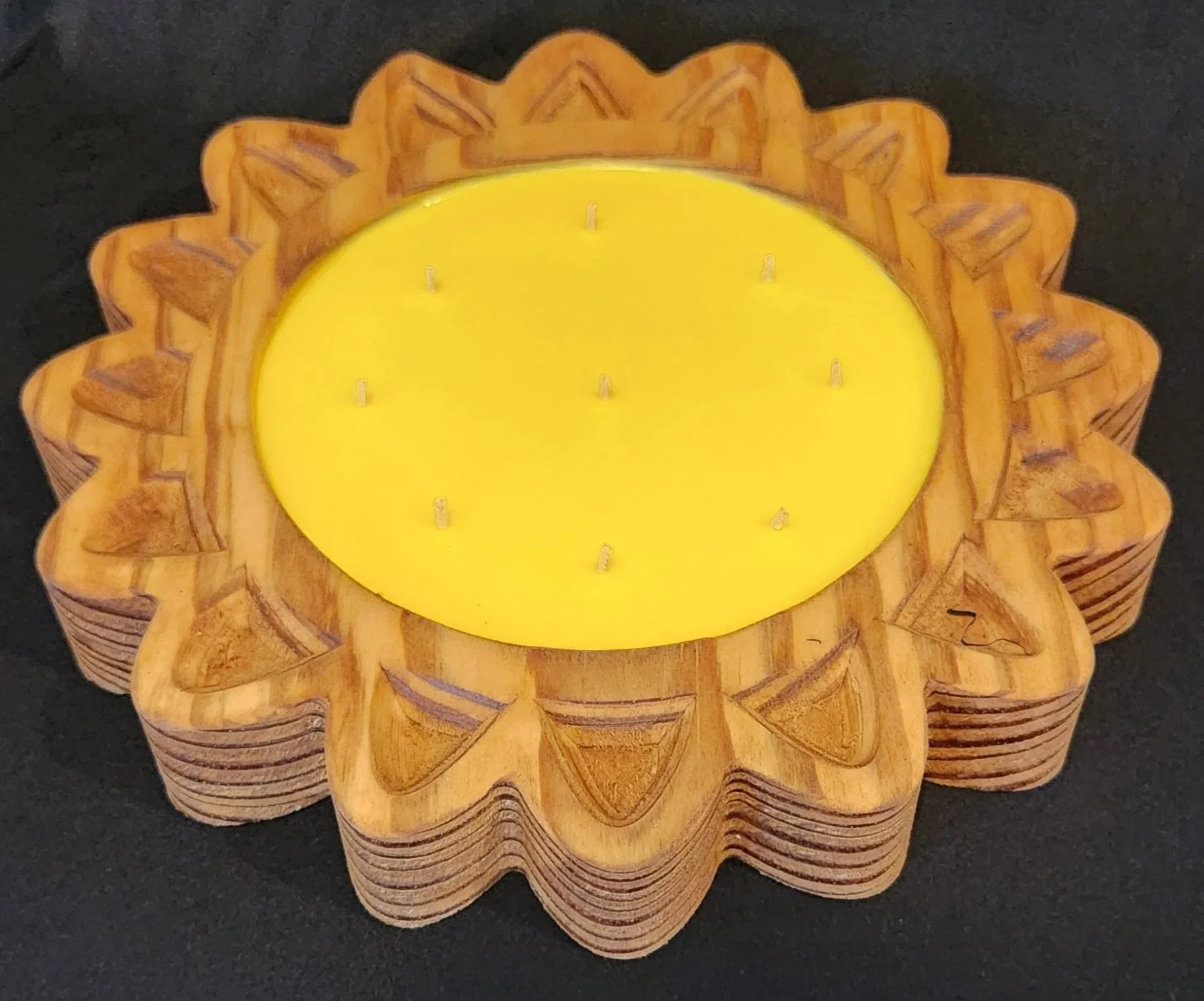
Poolside Cabana Candle
15 oz soy candle, nine cotton wicks, 11" wide.
.
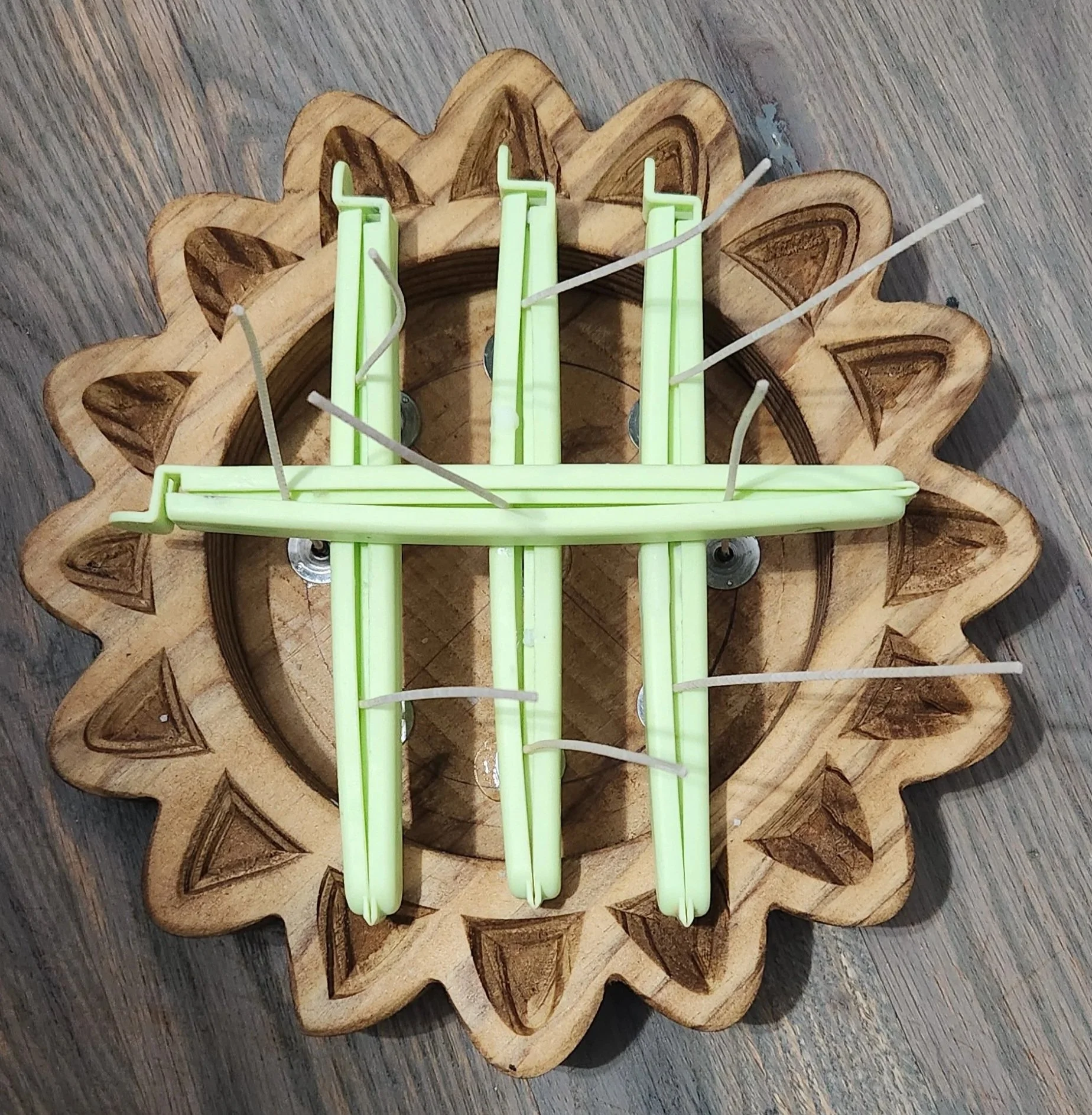
This is the process used to make the Poolside Cabana Candle. It represents hours of work, not including the work of the maker, Heritage Custom Works who cut, sanded and stained this beautiful piece.
Nine cotton wicks are measured for the correct spacing and are glued into place. The glue is left to dry overnight and the following day clips are used to secure the wicks. Soy wax is heated to 187 degrees. and yellow dye is added to the melted wax. When the temperature of the wax drops to185 degrees the fragrance oil is added and the mixture is thoroughly stirred. When the temperature of the wax drops to 135 degrees, the wax is ready to pour. It usually takes about 30 minutes for the wax to drop in temperature.
Why is temperature so important?
The wax molecules have to open up so the the fragrance oil can bind next to soy wax. The molecules never really mix together, sort of like when you are mixing oil and water.
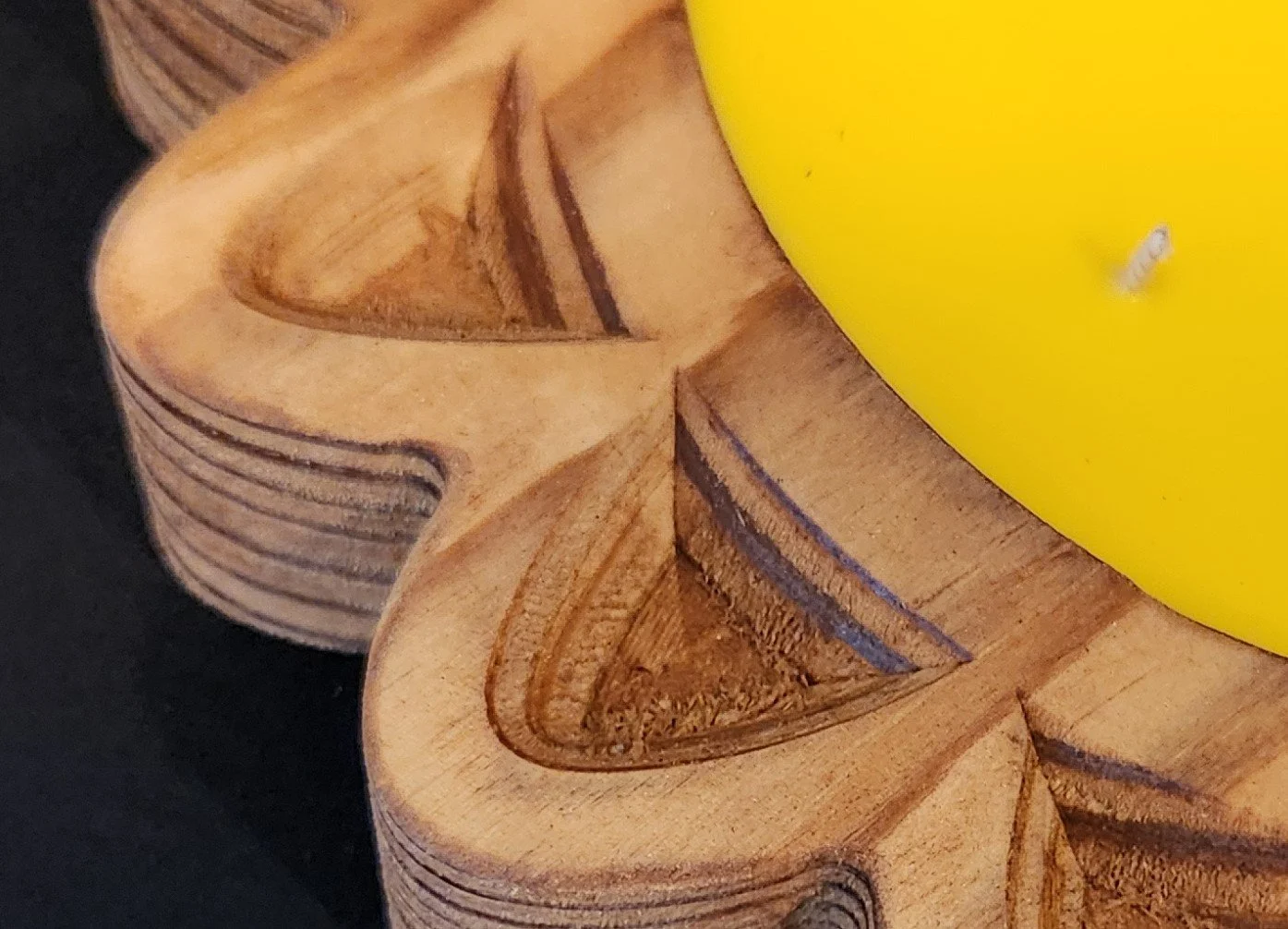
The reason that candle makers wait to pour soy wax at a lower temperature is so that the wax on the top of the candle does not appear bumpy. It is strictly for aesthetics purposes.
